Have you ever wondered what your face will look like in 20 years? With the advancement of technology, it's now possible to satisfy that curiosity with just a photo. That's right! There are powerful apps that use artificial intelligence to accurately simulate the aging process.
Furthermore, these digital tools aren't just for fun. They also help people reflect on the future, take better care of their health, and, why not, have fun with friends. So, if you want to take the test and download an app free that reveals what you will look like in the future, keep reading!
É realmente possível prever o envelhecimento facial com um aplicativo?
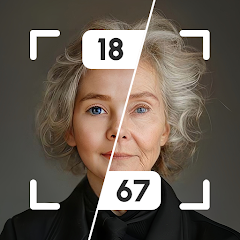
Yes, it is possible. The facial aging apps use advanced algorithms facial recognition combined with machine learning. In this way, they analyze characteristics such as wrinkles, skin texture and bone structure to simulate how these features would change over the years.
Plus, many of these apps rely on massive databases and realistic aging patterns. This means that with a simple selfie, you can generate an accurate and impressive image of how you'll look. in 20, 30 or even 50 years. Therefore, this technology is increasingly popular, both among young people and curious adults.
Top 5 Apps to Simulate What You'll Be Like in the Future
FaceApp – O Clássico do Envelhecimento Facial
O FaceApp is, without a doubt, the most famous application when it comes to facial agingWith just a selfie, the app transforms your face in seconds. It's easy to use, fast, and the results are incredibly realistic.
It also offers a variety of filters for testing different ages, including younger versions and even gender transformations. If you're looking for a reliable app with great features, this is a great option. free download.
Another strong point is that it allows share directly on social media, making the experience even more fun. Available at Play Store, FaceApp is an example of how technology can be used for entertainment and personal reflection.

AgingBooth – Foto do Futuro Simples e Eficaz
O AgingBooth is one of the pioneers in the market and, therefore, remains very popular. It doesn't require an internet connection, which is ideal for those who want to test anywhere. Simply download, take a picture and see what your face will look like in the future.
Despite its simple interface, it's extremely effective at simulating wrinkles, sagging skin, and other typical signs of aging. All this using facial transformation based on real standards.
Additionally, it's very lightweight, making it easier for users with older phones. It's worth testing and download now if you're looking for something quick and to the point.
FaceLab – Envelhecimento com Inteligência Artificial
Another highlight is the FaceLab, which focuses on artificial intelligence to age faces with extreme precision. It has one of the best aging simulation algorithms, resulting in images that are very close to reality.
Additionally, FaceLab offers additional features like facial rejuvenation and gender swapping. It also allows you to save images and create before-and-after comparisons. It's an excellent option for those who want to explore the concept of aged photo app more completely.
You can easily find it on Play Store and do the free download right now to see the incredible results.

YouCam Makeup – Beleza e Envelhecimento
Although it is known as a virtual makeup app, YouCam Makeup also has a unique feature of facial agingIt combines beauty filters with a realistic simulation of how your face will change over time.
Ideal for those who want to visualize both the future and possible changes with makeup and style. The interface is modern and the app is constantly updated with new features.
It stands out by combining functionality and fun, becoming a complete app for simulate age and play with the visual possibilities of your face.

Oldify – Transforme Seu Rosto em Velho com Estilo
Finally, we have the Oldify, which is popular for adding a dose of humor to the process. It simulates aging with a fun twist, allowing you to play with movements, voices, and even animations.
But make no mistake, despite the comical tone, the app also offers detailed simulations of how to age with an app, making the experience even more realistic. It's a great choice for those who want to have fun and still see a timeless transformation.
With it, you can take a selfie, apply the filter and see your future self in a matter of seconds.
Extra Features Worth Knowing About
In addition to visual simulations, many of these apps offer additional features. For example, some allow you to create age transition videos, while others suggest skincare based on your face type.
Another difference is the customization. You can choose whether you want to see your face at 40, 60, or 80, and even simulate different hairstyles, accessories, or weather conditions that would affect your aging.
So these apps not only answer the question "what will I look like in the future," but also offer interesting insights into health, lifestyle, and appearance.
An image generated, not a photograph of the future.
It's important to put this in clear words, because it changes how you look at the result: the file that appears on the screen is a new image, created on the spot by a program. It's not a photo of anything. There is no person, moment, or place behind it. It's entertainment, and it works very well as entertainment.
What the system does is recognize the facial structure in your selfie and draw over it the surface pattern it has learned by observing many images of older people. That's why the result is convincing and generic at the same time: the facial architecture is yours, the finish is borrowed.
Having said that, what remains is the part that truly deserves attention and is almost never discussed — what happens to your image after you tap “apply.” Because this part is no joke: it's a file with your face being transferred from your device.
Where does your selfie go when the effect is processed?
There are two possible paths, and they have very different consequences.
In local processing, the calculation happens inside the phone. The image doesn't leave the device, it works offline, and data consumption is zero. It's the path to the simplest effects.
In server-side processing, the app sends your photo to a remote computer, the effect is applied there, and the result is sent back. This is the path for the most impressive effects, because they require models that are too large to run on a regular device. And it means that a copy of your face has been transferred to an infrastructure that is not yours, in a country you did not choose.
Discovering which of the two is in use is simple: activate airplane mode and try applying the effect. If it gives an error or keeps loading, it depends on the server. It's also worth observing the waiting time — when a progress bar of several seconds appears with the device stationary, the image is almost always traveling.
The act of sending the file, in itself, isn't scandalous. That's how much of the technology works. What matters is knowing that it happened, and what the company committed to doing with that file afterward.
Facial features are biometric data, and Brazilian law treats this separately.
The General Data Protection Law, Law 13.709/2018, classifies biometric data as sensitive personal data — the same category as information about health, religion, and political opinion. An identifiable facial image falls into this category. This classification exists because you can change your password, but not your face.
In practice, this gives you some concrete rights, regardless of the company's size: to know what data of yours is stored, what it is used for, and with whom it has been shared; to correct incorrect information; to revoke the consent you gave; and to request the deletion of your data. Those who process data of Brazilians must offer a channel for these requests, and there is a national authority responsible for overseeing this matter.
There's another issue that affects many people without them realizing it: sending someone else's photo. The image of the face belongs to that person, not to the person who took the photo. Uploading a friend's selfie to "see how they'll look" is submitting sensitive third-party data without authorization. With children, the care is even greater, because the law requires consent from the person responsible for them and a decision guided by the best interests of the child—and a social media joke rarely meets this criterion.
Terms of use: the license that almost nobody reads
Upon installation, you accept a contract. This agreement often contains the answers you're missing, and it's worth looking for four specific points:
- Retention periodHow long the uploaded image is stored. Some services delete it in hours; others say nothing, and silence is not good news.
- For training purposes.If your photo can be used to improve the company's designs. This is a common and often broad clause.
- Image usage licenseSome terms require permission to display, reproduce, and adapt the submitted content, including for distribution. Note words like irrevocable, worldwide, and sublicensable.
- Sharing with third parties: advertising partners, infrastructure providers and companies within the same group.
You don't need to read the entire document. Open the page search and look for "biometric," "retention," "training," "license," and "delete." In two minutes you'll know what you're dealing with.
How to test a filter leaving the smallest possible trace.
- Opt for effects that work in airplane mode, meaning they are processed within the device.
- Use a photo of yourself, facing forward, with no other people in the background — each extra face in the image is more data being sent from someone else.
- Avoid photos that reveal your address, ID badge, documents, license plate, or work uniform in the background.
- Don't connect your social media account just to log in. Logging in via email reveals less information about you.
- Grant access only to selected photos, not the entire gallery — Android and iPhone allow you to choose this.
- After playing, delete the account within the app, not just the app itself. Uninstalling doesn't remove anything from the server.
- If you wish to go further, use the contact channel indicated in the privacy policy to request the deletion of your data.
Common questions
Will deleting the app delete the photos I sent?
No. Uninstalling removes the program from the device and nothing more. The data that was sent remains on the server until the company deletes it, according to their policy, or until you request its deletion through the indicated channels.
Is there a real risk that my selfie could turn into something else?
The practical risk isn't someone "stealing your face," it's the accumulation: many images of you, with dates and context, stored by different companies, with different policies, and subject to leaks. Reducing the number of scattered copies is a simple and effective measure.
Is it safe to log in with a social media account?
It's convenient, but it usually allows the reading of your name, photo, email, and sometimes your friends list. Registering via email provides less security. If you've already used this login, you can revoke the app's access in your network's security settings.
Can I publish an aged picture of a friend?
Ask beforehand. Besides the fact that the image is his, the result could embarrass him. And when the image is used to ridicule someone, the joke goes beyond humor and becomes a problem between real people.
Can the app use my photo in advertising?
Only if you have given permission — and that's exactly what some license clauses do. Therefore, it's worth looking for this section before uploading any image, especially to free services, whose revenue usually comes from a less visible source.
Conclusion
In short, the applications of facial aging are a fun and realistic way to predict the future. Whether for curiosity, fun, or self-discovery, these tools have won over millions of users worldwide.
With several options available in Play Store, you can find the ideal app to accurately simulate your appearance. Furthermore, with terms like turn face into old man It is photo of the future on the rise, interest in this type of technology is only growing.
So, don't waste time. Download app like the ones we list here can be the key to discovering a new version of yourself. Free download has never been so surprising.