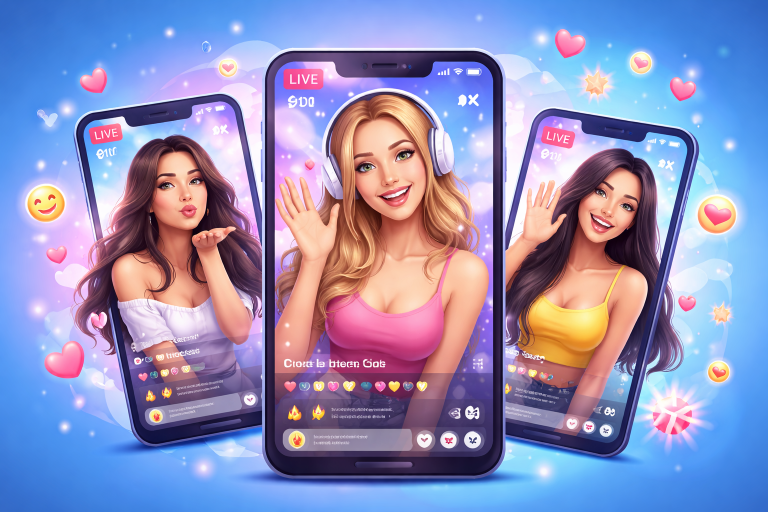
In an increasingly connected world, photo and video editing apps have become indispensable tools. After all, whether you're creating content for social media, capturing special moments, or even working professionally, having good resources is essential. That's why, in 2025, the demand for free apps for edit photos and videos grew even more.
Plus, since many of these apps offer advanced features for free, it's clear why they're so popular. With just a few taps on your phone screen, you can transform an ordinary photo into a work of art or give a simple video a professional look. So, in this article, you'll learn about the best free apps trending this year.
What is the best free app for editing photos and videos?
This is a very common question. The answer, however, depends largely on each person's needs. While some users seek simplicity and speed, others seek advanced features, such as exclusive filters, layered editing, and artificial intelligence tools.
However, in all cases, the good news is that there are several options available on the Play Store and the App Store. This means you can download the app that best suits your style right now and start editing hassle-free.
1. CapCut

O CapCut is one of the most downloaded video editing apps in the world in 2025. Developed by the same company behind TikTok, it offers direct integration with the social network, as well as numerous advanced features.
First, CapCut is completely free, which already makes it an excellent option. It also features modern transitions, special effects, and even automatic subtitles generated by artificial intelligence.
Another plus is that the app is easy to use, even for those who have never edited before. With just a few taps, you can crop, adjust, and export videos ready to publish. So, if you're looking for practicality and professionalism, this is one of the best free apps.
2. Canva

O Canva It has established itself as one of the most versatile tools for those who need to edit both photos and videos. Although it's best known for creating blog posts and graphic arts, in 2025 it's also a benchmark for multimedia editing.
This way, users find ready-made templates, drag-and-drop features, and a library with millions of royalty-free images and music. Another important detail is that the free version already offers many features that serve the public well.
So, whether you're creating a short video for Instagram or putting together a presentation, Canva is a solid choice. Without a doubt, it's one of the most comprehensive and indispensable apps of the year.
3. VN Video Editor
O VN Video Editor is another application that gained a lot of attention in 2025. After all, it combines professional features with a simple and intuitive interface.
Its main advantages include multi-layer editing, cinematic filters, and high-quality export without watermarks. Plus, it works perfectly on both entry-level and high-end phones.
Therefore, anyone looking for a free solution to create impactful videos will find VN to be a great alternative. It's ideal for content creators who want to stand out on social media.
4. Picsart
O Picsart remains one of the best options for editing photos in 2025. This is because it offers unique filters, creative tools, and even artificial intelligence features to automatically remove backgrounds or add objects.
Furthermore, the app boasts an active community where users can share their creations and gain inspiration from others. This makes it not only an editor but also a social network for creatives.
So, if the idea is to transform ordinary photos into unique images, Picsart is an essential choice for this year.
5. InShot

Finally, the InShot rounds out the list of the best free photo and video editing apps of 2025. Extremely popular, it's known for its ease of use and variety of features.
Its features include quick cuts, speed adjustments, and the inclusion of music, text, and fun stickers. The app also supports multiple formats, making it easy to share content across social networks.
With this, InShot remains a favorite for those who want practicality without sacrificing quality.
Extra features of the best apps
It's important to note that all of these apps have something in common: they offer features that were previously only available in paid software. For example, today you can use professional filters, to do editing with artificial intelligence and even export files in high resolution completely free.
Additionally, many of them have direct integration with platforms like YouTube, Instagram, and TikTok. This makes the creation and publishing process even faster and more convenient. Choosing any of these apps guarantees excellent results.

Destructive and non-destructive editing: the difference that saves the original file.
Every mobile editor works in one of two ways. In the destructive method, the app overwrites the file you opened with the result: it comes out cropped, it comes out with a filter, and the original no longer exists. In the non-destructive method, the app saves the image intact and separately notes a list of instructions — cropping, brightness, saturation, section cutting — and only puts everything together when exporting.
This matters because almost all regret comes later, when you look at the photo on your computer and realize that the filter has obscured the detail of the face. If the app works non-destructively, you can simply reopen the project and undo it. If it works over the existing filter, only what the system gallery has saved remains.
Here's a little-known detail: edits made by the native Android and iPhone photo apps are usually reversible. You open the edited image, tap "edit again," and there's an option to revert to the original, because the system keeps the previous version hidden. However, a third-party editor that exports a new photo doesn't have this link: two independent files end up taking up space.
Before messing with material you can't afford to lose, do a test once: edit, save, close, reopen, and look for the restore option. Discovering this with a birthday photo is far too costly.
Export at the right size for each place where the content will end up.
Half of the complaints about "lost quality" don't come from the editor, but from incorrect export followed by recompression applied by the social network. Each platform has a format it accepts without cropping or stretching, and deviating from the standard forces the system to resize it in its own way.
- Fullscreen vertical video: 9:16 aspect ratio, the same format as stories and short videos.
- Feed photo: 1:1 (square) or 4:5 (portrait), which is the tallest vertical aspect ratio accepted without cropping in most feeds.
- Horizontal video16:9, the standard for those who publish on traditional video players or watch on TV.
- Resolution1080p solves practically everything. Exporting in 4K multiplies the file size and, when uploading, the platform still recompresses it.
- Frame rateKeep the same frame rate as the recording. Mixing 30 and 60 frames per second in the same project often results in choppy motion.
Another helpful practice: always edit from the original file, never from a copy that has already been shared on WhatsApp. The messenger compresses images and videos to save data, and what arrives on the other end has already lost information. Re-editing this material is piling loss upon loss.
Soundtrack, copyright, and the video that appears silent.
A well-edited video disappearing because of the music is guaranteed to be frustrating, and this is one of the most common misconceptions among beginners. The audio library within the editing application is for what you produce yourself; the social network's music library is for what is published there. They are not the same thing, and the license does not travel with the file.
If you export a video with an embedded commercial track and publish it on another platform, the automatic audio identification system may mute the segment, block its display in some countries, or direct monetization to the copyright holder. None of this is a punishment from the platform against you: it's the agreement it has with the record labels running automatically.
Therefore, when the video has any commercial purpose — promoting work, advertising, or serving a client — choose a track that is cleared for that use and read the terms and conditions next to it. Many free tracks require credit in the description, and some prohibit advertising use. It's the kind of detail that nobody checks until they receive the notification.
What the free option usually charges for later.
A fully-fledged publisher doesn't survive on its own. It's worth understanding where the money comes from before investing hours putting together a project that might not even be completed.
- Announcement between stagesThis appears before exporting or when unlocking an effect. It's the most common and honest model because it doesn't charge you anything.
- Feature reserved for subscription.The effect appears in the list; you assemble the video around it, and the padlock only becomes visible during export.
- WatermarkThe free version exports with the app's logo in the corner, and removing it is a paid feature.
- Resolution or duration limitIt exports, but in reduced quality or with a time limit.
- Try it free for a few days.It becomes a recurring charge if not canceled, and the charge continues even after uninstalling the app, because it resides in your store account, not on the device.
Before starting a long project, do a short ten-second test and take it all the way to the final export. You'll find out where the padlock is in two minutes, instead of after two hours of work.
What a mobile editor can't fix
There is a physical limit that no application can exceed, and recognizing it saves time. The editor works with the information already in the file; where there is no information, it fills in with an estimate.
A blurry photo won't become sharp again: motion blur has erased the boundaries between objects, and the sharpening tool only increases the contrast on the remaining edges, which often leaves the image looking rough. A very dark photo gains color noise when you increase the brightness, because what's being amplified is the sensor's hiss. Enlarging a small image doesn't recover detail—the program invents intermediate pixels from their neighbors.
Also, don't expect the editor to fix bad framing, misplaced focus, or a messy background. Cropping helps, but every crop throws away resolution. Spending an extra thirty seconds at the moment of capture is worth more than thirty minutes of editing later.
Frequently Asked Questions
Does editing on a mobile phone lose quality compared to a computer?
Not necessarily. The loss comes from exporting and recompressing, not from the device itself. A modern cell phone processes 1080p video without difficulty. The real difference appears in long projects with many layers, where the small screen and limited memory hinder performance more than the processor.
Why does the video slow down or freeze during editing?
Because the preview is generated in real time. The more layers, effects, and text stacked, the more the device has to calculate for each frame. Closing other applications, reducing the preview quality in the settings, and dividing the project into smaller parts usually solves the problem.
Do I need internet to edit?
For basic cropping and adjustments, no. But artificial intelligence features—background removal, automatic captions, resolution enhancement—often run on a server. In that case, the file is uploaded, processed off-site, and then returned. This consumes data and means your image has passed through a computer that isn't yours.
How much space does the edit consume on the device?
More than it seems. The app saves the original file, the project's temporary files, and the exported version. A short, high-resolution video can easily become several large files. Deleting completed projects within the app itself, and not just in the gallery, frees up significantly more space.
Conclusion
In short, the best free apps of 2025 to edit photos and videos These are: CapCut, Canva, VN Video Editor, Picsart, and InShot. All of them offer advanced features at no cost, making them ideal for both beginners and professionals.
This way, you can download it for free from the Play Store or App Store and start creating amazing content today. After all, with technology becoming increasingly accessible, editing photos and videos directly on your phone has never been easier.
So don't waste time: choose your favorite, download it now, and turn your creativity into results.