
Living a trans relationship Building healthy relationships can seem challenging at certain stages of life. However, when there is room for dialogue, acceptance, and emotional maturity, everything tends to flow more smoothly. Furthermore, building more conscious relationships has become increasingly important, especially because many people today seek genuine and lasting connections.
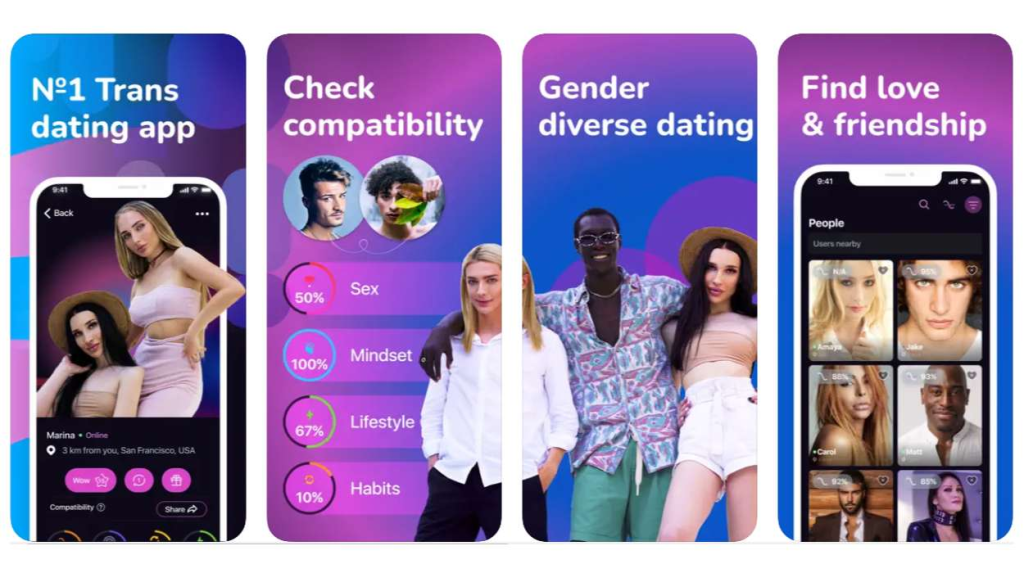
At the same time, it's essential to recognize that relationships involving gender identity require information, respect, and a solid foundation. Therefore, understanding what truly works—and how to apply it in daily life—makes all the difference. With the advancement of chat applications and platforms for meeting new people, including those you can... download now for the PlayStoreIt becomes even easier to find partnerships that share similar values.
Furthermore, since many transgender people seek safer environments, it's crucial to know how to transform any relationship into something healthy. Therefore, understanding emotional needs, communicating boundaries, and building trust becomes indispensable. For this reason, this guide brings together... five practical ways to strengthen any trans relationship, ensuring that the journey is lighter, more respectful, and more genuine.
1. Prioritize meaningful communication every day.
First of all, a trans relationship A healthy relationship begins with communication. Although it seems simple, constant exchange prevents misunderstandings and strengthens the emotional bond. Furthermore, talking about feelings, boundaries, and expectations ensures that both parties feel respected. Therefore, establishing an honest dialogue from the start avoids accumulated conflicts.
At the same time, it's essential to create an environment where both people can express vulnerabilities without fear. This way, the relationship becomes more supportive. Even difficult conversations end up flowing more naturally. In fact, many couples use messaging apps that help with emotional organization, and these apps can be found for... free download.
Consequently, when communication is constant, the couple's self-esteem improves, mutual support grows, and the relationship becomes stronger. Therefore, whenever possible, set aside time to talk attentively and carefully.
2. Build emotional security and digital protection.
Besides communication, another important pillar for a trans relationship Healthy security is key — both emotional and digital. After all, even though the world is progressing, transgender people still face vulnerabilities. Therefore, keeping data protected becomes essential, especially when the relationship begins online.
In fact, many apps offer tools for digital securityFeatures such as two-step verification, protected chats, and blocking features. Furthermore, it's always important to check if the app you intend to use has the necessary features. download now in the PlayStore It has good reviews and clear privacy policies. This care prevents unpleasant situations and ensures secure connections.
Similarly, emotional security is essential. This means validating feelings, acknowledging moments of vulnerability, and avoiding actions that diminish the identity of the trans partner. In this way, it becomes possible to create an environment of trust, acceptance, and genuine love.
3. Respect identities and boundaries on an ongoing basis.
Another crucial point for strengthening a trans relationship It involves constant respect. Even if the couple has already discussed gender identity, pronouns, and boundaries, this dialogue should be recurring. This is because, over time, personal discoveries can evolve. Therefore, maintaining openness to revisit this topic demonstrates support—something fundamental.
Furthermore, respecting boundaries isn't just about conversations. It also includes everyday actions, such as avoiding uncomfortable comments, not sharing information without consent, and avoiding hurtful jokes. In this way, trust is maintained and reinforced.
However, if any boundary is crossed, the ideal is to talk about it immediately. The sooner the issue is addressed, the less discomfort there will be and the greater the harmony. And, if you feel the need, there are therapy and emotional self-care apps you can use. free download to assist in the process.
4. Invest in well-being and emotional health.
In addition to respect, promote well-being inside a trans relationship It is indispensable. Transgender people frequently face external pressures that wear down their mental health. Therefore, taking care of their emotions becomes even more important. Thus, maintaining healthy habits, seeking therapeutic support, and adopting self-care practices strengthens the relationship.
Furthermore, by sharing positive activities—such as exercise, hobbies, or leisure time—the emotional connection grows. The partnership becomes deeper, lighter, and more natural. Moreover, when both feel good about themselves, the relationship flows more smoothly.
And, if there is interest, there are several meditation, mindfulness, and emotional support apps available for... downloadMany of them help couples balance emotions and face difficult days together.
5. Create secure connections and avoid external comparisons.
Finally, to live a trans relationship To be truly healthy, it's essential to avoid comparisons. Each couple has its own story, rhythm, and challenges. Therefore, observing other people's relationships can create unrealistic expectations. Thus, focusing energy on your own relationship makes everything more authentic.
Furthermore, building secure connections requires mutual involvement. This includes conversations about the future, support during difficult times, and partnership in important decisions. Consequently, the couple develops emotional maturity and stability. Additionally, it's possible to create an environment where both feel valued.
And if they're looking for new friendships or support networks, there are social apps designed for that. LGBTQIA+ community, perfect for those who want to expand their network in a respectful way. Just access the PlayStoreto carry out the download and enjoy.
Common question: How to deal with prejudice and strengthen the relationship?
Dealing with prejudice while living through a trans relationship It can be tiring. However, it is possible to strengthen the bond through unity and emotional preparation. First, talking about fears and protection strategies helps the couple act with more confidence. Furthermore, agreeing on responses, boundaries, and attitudes avoids external conflicts and reduces strain.
At the same time, seeking support in groups, online communities, or collaborative therapy strengthens self-esteem and a sense of belonging. Thus, even when difficulties arise, the couple remains strong and connected. Therefore, facing prejudice doesn't have to be a lonely experience; it can be a journey undertaken together, with love, maturity, and constant dialogue.
Useful app features to strengthen relationships
Today, many apps offer features that make daily life easier for transgender couples. Among them:
- Secure chats with encryption
- Shared diary
- Joint agenda
- Emotional support
- Self-care tools
- Data protection features
- Secure call with instant blocking.
- Guides to effective communication
Although these features don't solve everything, they are very helpful in daily life. Therefore, it's worth analyzing which ones make sense for your situation, downloading the desired app, and enjoying the benefits.
Caution or control: where is the line?
Much of the control within a relationship comes disguised as care. It begins with legitimate concern, becomes a demand, and after some time, becomes a routine that no one questions anymore. Because the process is slow, those involved rarely notice. Some behaviors deserve a name:
- Requiring a password for mobile phones or social networks. As proof of love. Trust isn't demonstrated by granting access; it's demonstrated through conduct.
- Mandatory location Full-time, with charges applied when the location on the map doesn't match the explanation.
- Filter friends and family, creating discomfort whenever you see certain people, until you stop seeing them altogether.
- Controlling money — deciding on shared expenses alone, demanding accountability for small amounts, making it difficult to access one's own income.
- To express opinions about body image and healthcare., including hormonal monitoring, consultation, and personal presentation, as if it were a decision for the couple and not just yours.
- Threaten to expose The manipulation of someone's identity or orientation in environments where that person does not present themselves as such. This is not a marital dispute; it's blackmail.
One point complements what this site has already explained in other articles: monitoring another adult's device without authorization is not just unresolved suspicion; it's conduct treated as invasion of privacy under Brazilian law. Relationships that require surveillance to function have ceased to function.
Support network when family doesn't help.
Transgender couples often carry an extra burden: in addition to the problems common to any relationship, they deal with a lack of acceptance from those around them. Building a support network is a practical, not an abstract, task.
Start with what's nearby. Transgender collectives and associations in various cities offer support groups, guidance on documentation, and referrals to services—and they're worth more than any generic advice from the internet because they understand the local reality. In public health, the primary care unit is the entry point and provides referrals for mental health care; specialized clinics exist in some capital cities, with their own waiting lists and criteria.
Affordable therapy exists outside the private sector: university psychology clinics offer therapy at social rates or free of charge, and this is an underutilized option. For moments of emotional crisis, there is free 24-hour telephone support available by trained volunteers in the service of valuing life, by calling 188.
Finally, it's important to agree on who each of you calls when things get tough. Couples who rely exclusively on each other for all emotional support will suffer together.
Rights of those who live together
Many people discover too late that the relationship already produces legal effects, and that others only exist if they are formalized. The most important points are:
- Civil marriage Marriage between people of the same sex cannot be refused by registry offices in Brazil — a ruling by the National Council of Justice has been in effect since 2013.
- common-law marriage It is characterized by public, continuous, and lasting cohabitation with the goal of forming a family. Registering a deed at a notary's office does not create the union; it only facilitates proof when you need it.
- Health insurance and pension plan They accept a partner as a dependent, provided the relationship is proven. This is where a deed or marriage certificate can prevent months of disputes.
- Inheritance and assets. Without formalization, the partner needs to prove the union after the other's death, often in dispute with the family. A will and a defined property regime avoid the worst-case scenario.
- Health decisions. A simple power of attorney allows a partner to be recognized as being authorized to accompany the patient during hospitalization and take necessary steps, something that hospitals often question when there is no such document.
When violence happens inside the home.
Domestic violence is not exclusive to heterosexual couples, and the delay in naming what is happening is precisely what prolongs the situation. Pushing, threats, destruction of objects, humiliation in front of other people, and financial control are all on the list, even without visible signs.
The path exists. The police can be reached by dialing 190 in emergency situations. The federal government's human rights hotline receives reports by dialing 100, including those related to gender identity-based violence, and operates 24 hours a day, confidentially. Specialized police stations and the Public Prosecutor's Office can request urgent protective measures, and the Superior Court of Justice has already recognized that the protection of the Maria da Penha Law extends to transgender women in the context of domestic violence.
If you are helping someone in this situation, the most useful thing is not to convince the person to leave immediately: it's to maintain contact, not judge, and help prepare the basics—separate documents, some savings, a place to go, and someone notified. A planned exit is more protective than an impulsive one.
Other questions about relationships and identity.
How can you tell if it's ordinary jealousy or controlling behavior?
Jealousy bothers the person who feels it; control restricts the life of the person who receives it. The practical test is to look at the balance: if, over the months, you see fewer people, go out less, spend less on yourself, and explain things more, it's no longer jealousy.
My partner doesn't want to tell anyone about our relationship. Is this normal?
It can be legitimate protection for those who don't yet feel safe to come forward publicly, and that deserves patience. It becomes a problem when secrecy is permanent, when it's imposed only on you, and when it serves to keep other possibilities open. Talking about timeframes and each other's limits resolves a good part of it.
Is couples therapy worth it?
It's useful when both partners want to stay together and the conversation always stalls at the same point. It doesn't function as a court to decide who is right, and it doesn't replace individual counseling when there is pre-existing suffering before the relationship. Teaching clinics offer couples therapy at affordable prices in several cities.
His family doesn't accept me. Is it possible to live like this?
It's possible, as long as the boundaries are agreed upon between the two of you and upheld by family members. The strain doesn't come from the rejection itself; it comes when one of you is left alone to deal with it. Defining together what is acceptable to hear and what ends the visit is usually more effective than demanding approval.
Where can I find support groups near me?
Ask at your local primary healthcare unit and social assistance referral centers—they usually have contacts with local community groups. Public universities with psychology and social work programs also run outreach programs open to the community.
Conclusion
In conclusion, to live a trans relationship A healthy relationship involves dialogue, care, respect, and daily building. Even when external challenges exist, when couples support and listen to each other, it becomes possible to strengthen the relationship and experience love fully. Furthermore, by combining communication, emotional security, digital protection, and well-being, everything flows more naturally.
Therefore, always remember: healthy relationships are built from daily choices. So, cherish affection, celebrate small victories, and remain open to growth. In this way, you will have more and more chances to experience something genuine, secure, and deeply nurturing.