
Warning: no app charges your phone using sunlight. Charging requires a power input via hardware — external solar panel, power bank, or wall outlet. Apps do not generate energy; at most, they help you use less power.
Nowadays, with the advancement of technology and the growing search for sustainable solutions, many people have been looking for alternatives to save energy. In this scenario, solar energy applications are gaining more and more prominence, especially those that promise to optimize or even simulate cell phone charging through sunlight.
Furthermore, the interest in download app that helps in the management or use of solar energy has increased considerably. Thanks to increased awareness about the use of renewable energy, smartphone users want to combine practicality and sustainability in their daily lives.
How can technology simulate solar charging?
Currently, many developers are betting on creative solutions that help save battery power (no app generates energy) through features integrated into the phone. Although most phones still don't come with built-in solar panels, there are... solar energy applications that offer interesting features for users concerned about energy savings.
For example, some of these apps offer monitoring systems that calculate the level of solar exposure, optimizing the ideal time to connect the portable solar charger. In addition, it is possible to find apps with usage tips, alerts and even integration with solar panel for cell phone.
So if you are looking for download now a useful and sustainable app, read on and discover the 5 best ones available today.
The 5 best apps to charge your cell phone with solar energy
1. Solar Charger Simulator
O Solar Charger Simulator is one of the most popular apps when it comes to simulating solar charging. Although it does not actually charge the phone, it offers a realistic interface that shows the charging simulation, in addition to educating the user on the principles of solar use.
Plus, it's a great way to introduce the topic of photovoltaic solar energy for those who are just starting out in this universe. With that, even though it is a simulator, it attracts millions of downloads on PlayStore and becomes an excellent choice for those seeking curiosity and entertainment.
Another positive point is that the application is free. That is, you can free download and experience for yourself how a solar charger would work on your smartphone. Although it is just a simulation, it is an interesting entry point into the topic.
2. Solar Panel Charger Prank
Just like the previous one, the Solar Panel Charger Prank is also a simulation app. With eye-catching graphics and ambient sound that simulates nature, it delights curious users with the idea of transforming sunlight into battery charge.
Even though it is not a functional app to actually carry around, its educational proposal is valid. With it, you can play with friends and family, in addition to learning more about the concept of renewable energy technology applied to everyday life.
With over a million active users, the app is light, fun and available for free download in various app stores. It is ideal for those who want to know a solar energy application in a fun and non-binding way.
3. PV Solar Calculator
Unlike the previous ones, the PV Solar Calculator It is a much more technical app and aimed at those who have a system residential solar energy. It allows you to calculate energy production, evaluate system efficiency and predict monthly savings based on solar radiation at your location.
This type of application is essential for anyone who has already invested in solar panel for cell phone or intends to invest. It transforms data into decisions, helping the user to optimize consumption and identify possible failures.
The app is free, but requires some technical knowledge. If you are looking for more than a simulation and really want to control and monitor your solar system, this is the ideal application. It is available for download app on Android and iOS.
4. MySolar – Monitoramento Solar
If your goal is solar energy savings, the MySolar It's perfect. It was developed especially for those who have solar energy systems installed, whether at home or in businesses. The app monitors production, consumption and sends daily reports with simple and objective graphs.
Thanks to its intuitive interface, anyone can monitor the performance of their solar system in real time. This makes financial control easier and also helps in energy efficiency.
Additionally, the app is frequently updated and has an active community of users who share experiences. With this, MySolar also becomes an educational tool for those who are starting out in the world of photovoltaic solar energy.
5. Eco Energy App
Finally, the Eco Energy App is a complete solution for those who want to combine technology and sustainability. The app offers practical tips, monitors cell phone consumption and suggests ways to use the device with less battery consumption, ideal for those who depend on portable solar charger.
In addition, it has a solar intensity meter, which allows the user to identify the best times to leave the cell phone near a solar source. Even if the charging is not real, it guides the user on the best time to use it.
Available for download now, the app is an interesting tool for those who already use it residential solar energy, as well as for those who are just starting out. It combines useful information with a modern interface, and is highly recommended for those who care about the environment.
Additional features and benefits of solar apps
In addition to the main functions, these solar energy applications offer a number of extra features that add even more value. For example, many of them come with weather and UV radiation alerts, which helps you plan your usage. solar panel for cell phone with greater precision.
Others offer integration with virtual assistants and connection to IoT systems for whole-home lighting and energy control. This all contributes to energy efficiency of the environment as a whole, going far beyond simply charging a cell phone.
Finally, it is worth remembering that all the apps mentioned can be easily found on PlayStore, just type the name and click on download. Many are lightweight, free and have a large number of positive reviews, which proves their usefulness.
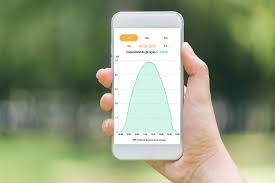
Why does the load only enter through hardware?
A cell phone battery doesn't produce energy: it stores energy that comes from outside. To recharge, an electrical current must physically enter the device—through the connector, an induction base, or a cable connected to a source, whether it's a wall outlet, a car charger, a portable battery, or an external solar panel.
An app is software. It reads sensors, displays numbers, and adjusts settings, but it doesn't move electrons into the cell. No permissions, no adjustments, and no animated screens change that. When an app shows the battery rising while you point your phone at the sun, what's rising is an animation; the actual percentage continues to fall, partly because the screen being on and the bright light require high brightness, which is the device's biggest energy consumer.
There's a detail that reinforces the point: the camera and the light sensor measure amount of light, They don't capture it as usable energy. Capturing light and transforming it into current requires a photovoltaic cell, a component that the average cell phone simply doesn't have.
What a portable solar panel delivers in practice.
Solar panels do work, but within limits that advertising often hides. It's worth knowing what to expect before buying:
- The advertised power output is laboratory power. It assumes the sun is at its zenith, the sky is clear, and the panel is perpendicular to the sun's rays. An awkward angle, a passing cloud, or the shadow of a branch will immediately and drastically reduce the signal generation.
- Glass gets in the way. A panel behind a car or house window yields a fraction of what it would yield outdoors.
- Small panel barely ties. Those integrated into cases and bags usually generate less power than the phone consumes when turned on; in other words, they don't fully charge the battery, they only delay its depletion.
- The best arrangement is indirect. Use the panel to charge a portable battery throughout the day and recharge your cell phone from it at night or in the shade.
- Heat is the enemy of the battery. Leaving your cell phone exposed to the sun to "take advantage of the light" accelerates the chemical degradation of the cell and can cause the device to stop charging due to thermal protection.
The role that an app can really play here
This doesn't mean that software is useless in this matter. It simply operates on the consumption and monitoring side, not the generation side.
- Show how much battery each app has consumed in the last few hours.
- Activate power saving modes based on time, load level, or location.
- Notify you when automatic brightness or always-on display settings are impacting your bill.
- To monitor the production of a photovoltaic system installed on the roof, by reading the data that the inverter itself publishes.
- Estimating energy generation from publicly available solar irradiance and weather forecast data is useful for those planning to install solar panels.
Regarding the category that presents itself as a solar charger: these are almost always prank apps, supported by advertising displayed between screens. There's nothing wrong with using them for fun, but it's worth being suspicious when such an app asks for broad permissions—access to files, contacts, or accessibility—because simulating a charging animation doesn't require any of that.
How to extend battery life when there's no power outlet nearby.
Without generating energy, the only option left is to spend less. In order of what saves the most:
- Lower the brightness to the lowest comfortable setting and turn off the always-on display. The screen is usually the biggest single power consumer.
- Activate system power saving mode, which cuts off background synchronization and limits processes.
- On OLED screens, use dark mode: black pixels consume virtually no energy.
- Turn off the apps that constantly search for a signal: location services, Bluetooth, and wireless network scanning.
- In areas with weak signal, lock the network onto 4G or activate airplane mode. Searching for a 5G signal where there is no coverage drains the battery quickly.
- Avoid recording video while playing games. The camera and the game activate the processor, screen, and sensors simultaneously.
- Keep the device in the shade and out of a tight pocket; a hot battery will discharge faster.
Frequently Asked Questions
Are there cell phones with built-in solar panels?
There have been commercial attempts, and the result has always run into the same problem: the available area on the back of a cell phone captures little energy, while the consumption of a modern device is high. The gain is in the range of slightly extending the standby time, not actually charging.
Is a pocket-sized solar charger worth it for travel?
This is worthwhile when it's a reasonably sized folding panel combined with a portable battery, for camping or multi-day hikes. As an urban solution, a regular portable battery charged from an electrical outlet works better and is cheaper.
Does a battery saving app make the charge last longer?
It can help identify what's consuming power, but the controls that really matter are already in the system: brightness, power saving, background restriction, and location permission. An extra app running all the time also consumes power.
Does leaving your cell phone in the sun to "absorb" something help?
It doesn't help and it hurts. Heat accelerates the chemical wear and tear of the battery, and the device may reduce performance or interrupt functions to protect itself. If you use a solar panel, the panel is in the sun; the cell phone is in the shade.
Why do these apps remain available if they don't work?
A large portion of these apps are published in the entertainment or simulation category, which is allowed as long as the description doesn't claim to actually charge the battery. What sustains these apps is advertising, which is why they insist on displaying screens full of ads between steps.
Does solar energy at home charge cell phones more cheaply?
Cell phones use a small amount of energy per day, so the direct savings are irrelevant. A photovoltaic system compensates for the larger household energy consumptions, such as showers, refrigerators, and air conditioners—the cell phone is just a piggybacking effect.
Conclusion
As we have seen throughout this article, there are several options solar energy application currently available. Although most still function as simulators or technical support, these apps represent an important step towards sustainability and the conscious use of technology.
So if you want download now an app that contributes to the planet and still brings quality information, it is worth trying one of the options mentioned. In addition, by using apps like these, you become part of a growing movement of using renewable energy technology in everyday life.
We hope this list has been helpful! Don't waste time: choose your favorite, do the free download, take advantage of the features and start taking care of your energy consumption more responsibly right now.