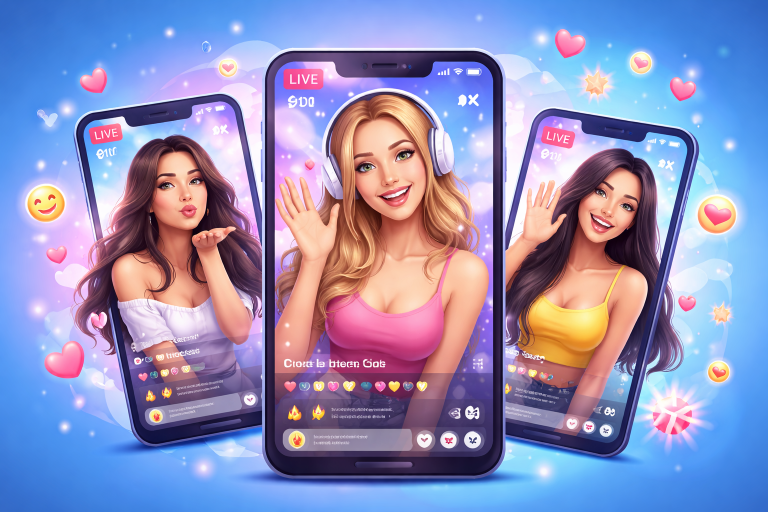
In the digital age we live in, watching TV is no longer limited to traditional devices that take up considerable space in our living rooms. Now, with just a few taps on our smartphones, we can access a wide range of television content, from hit series to up-to-date news, all at our fingertips. This convenience has transformed the way we consume media, allowing us to watch our favorite shows anywhere, anytime.
This phenomenon was only possible thanks to the development of dedicated applications, which provide a user-friendly interface and a viewing experience optimized for smaller screens. These apps not only connect us to traditional TV channels, but also to exclusive content, on-demand series and films, taking the TV watching experience to a new level.
Melhores Aplicativos de TV para Celulares
Identifying the ideal app for watching TV on your cell phone can be a challenge, given the large number of options available. Below, we list five applications that stand out for their quality, variety of content and ease of use, making your experience of watching TV on your cell phone more enjoyable and accessible.
Netflix
Netflix is, without a doubt, one of the most popular streaming services in the world, offering a wide range of high-quality series, films and documentaries. With an intelligent recommendation algorithm, the platform suggests content based on user preferences, ensuring a personalized experience. Furthermore, Netflix constantly updates its catalog with critically acclaimed original productions, keeping the public always engaged and eager for new things.
Subscription plans vary, allowing users to choose the option that best suits their needs and budget. Ease of use and the ability to create individual profiles within the same account are features that make Netflix a favorite choice among families and groups of friends.
Prime Video
Prime Video, Amazon's streaming service, offers a rich catalog of award-winning films, series and original productions. With subscription, users also have access to additional benefits on the Amazon platform, such as free shipping on eligible products and access to exclusive offers. Prime Video stands out for its intuitive interface and the ability to download content for offline viewing, ideal for those who are always on the move.
Prime Video's original productions, such as “The Marvelous Mrs. Maisel” and “Fleabag”, have received international recognition, elevating the platform's status in the competitive streaming market.
GloboPlay
GloboPlay is Rede Globo's response to the growing interest in streaming, offering not only access to a wide selection of TV programs, soap operas and news broadcast by the broadcaster, but also to exclusive series and films. With GloboPlay, users can follow Globo's main channels live, in addition to having access to a rich collection of past productions, allowing them to relive Brazilian television classics.
The platform also invests in original and exclusive content, attracting a diverse audience interested in high-quality national productions.
Disney+
Disney+ is the ultimate home for Disney, Pixar, Marvel, Star Wars and National Geographic fans. With a comprehensive catalog that includes everything from timeless classics to the latest additions to these franchises, Disney+ offers entertainment for all ages. The platform is also known for its exclusive documentaries and original series, such as “The Mandalorian”, which has become a global phenomenon.
The possibility of creating up to seven different profiles and the option for parental controls make Disney+ an excellent choice for families.
HBO Max
HBO Max brings the prestige of HBO programming, known for its high-quality series and exclusive film productions. In addition to HBO's acclaimed catalog, the platform includes content from Warner Bros., New Line Cinema, DC, CNN, TNT, TBS, truTV and
Cartoon Network, making it one of the most diverse in terms of content.
With series like “Game of Thrones” and “Westworld”, HBO Max offers a unique experience for series and film lovers, complemented by a user-friendly interface and customization options.
Explorando as Funcionalidades
In addition to access to exclusive content and a diversity of genres and titles, mobile TV applications offer a series of features that enrich the user experience. From the ability to create multiple profiles to the option to download for offline viewing, these apps are designed with convenience and personalization in mind.
Another important feature is parental control, which allows parents or guardians to filter content accessible to minors, ensuring safe and age-appropriate browsing. Additionally, most services offer the option to adjust the streaming quality, an advantage for those who need to save mobile data or have a limited internet connection.
FAQ – Perguntas Frequentes
Q: Do I need an internet connection to use these apps?
A: Yes, you must have an internet connection, whether via Wi-Fi or mobile data, to access the content of the applications.
Q: Can I watch content on more than one device at the same time?
A: It depends on the service and subscription plan chosen. Some apps allow multiple simultaneous streams, while others limit the number of devices.
Q: Is it possible to share an account with friends or family?
A: Many applications offer plans that allow account sharing, with the creation of individual profiles for each user.
Q: Do mobile TV apps offer 4K content?
A: Some services provide content in 4K, but you must have a compatible device and a stable, fast internet connection.
What is truly free when it comes to TV on your cell phone?
It's important to distinguish between categories before installing anything, because the word "free" refers to three very different realities. The first is a subscription service, which charges a monthly fee and only offers an initial free trial period. The second is an advertising-supported layer, truly free and without a monthly fee, which displays ads throughout the programming. The third is a free-to-air broadcast app, free to install, but with part of the channel lineup blocked due to rights issues.
Confusing the three leads to frustration. A paid service's app doesn't become free just because you haven't paid yet; it's in a trial period, and billing starts automatically when the trial ends. The free tier, on the other hand, doesn't have the exclusive content that made the paid service famous—and it won't have it, because that's what sustains the subscription.
The practical criterion is simple: if at any point the app asks for a credit card, you're using a paid service. If it never asks for one and shows advertising, you're on the legitimate free tier. And if it doesn't ask for a card, doesn't show ads, and promises everything, you're using a service that doesn't pay anything at all.
Why can't my cell phone receive broadcast TV without internet?
Many people remember devices that tuned into digital television directly, using a retractable antenna. This feature required a radio frequency tuner inside the cell phone, a component that has practically disappeared from current models due to cost, internal space, and decreased demand.
Without this component, no app can receive television signals over the air. What apps do is receive programming via the internet, which changes everything: it consumes data, depends on a connection, and is subject to digital rights contracts. That's why a game, a movie, or even an entire program can appear on the living room TV and be blocked on the same broadcaster's app.
For those who want genuine free-to-air television without using up data, there are two physical options: an external receiver connected to a compatible mobile phone, or a converter box with an antenna connected to the television. Both pick up the signal that is already on the air, which is free and does not depend on any internet connection.
Channel with programming within the app: television that was born on the internet.
A large part of what is now called free TV on mobile phones is a proprietary format: thematic channels with linear programming, put together by companies that have licensed old archives and organized them into a grid. You open it, choose the channel, and watch whatever is on at that moment.
This format has characteristics that you should be aware of before getting annoyed by them:
- There's no pause or turning back: if you arrive in the middle, you stay in the middle.
- The schedule repeats in cycles, and the same block usually returns within a few days.
- The collection consists of older productions and catalogs that have already been monetized, because they are the cheapest to license.
- Commercial breaks are unavoidable, as they are the channel's only source of revenue.
- The list of channels changes frequently, as contracts come in and out.
On the other hand, it's the format that demands the least from the user: it doesn't ask for an account, it doesn't ask for a credit card, and it solves the problem of having the television on in the background. For those who want to choose titles and times, however, it's the wrong format—the right one is the on-demand catalog.
Free trial and automatic renewal: where the account appears
The biggest source of unexpected charges on video apps isn't a scam: it's the trial period that turns into a subscription. The pattern is always the same — registration with a card, a few days free, silent automatic renewal. None of this is illegal, as long as it's disclosed, and it is disclosed, usually on a screen that nobody reads.
To avoid paying for distractions:
- Write down the test end date in your calendar, with a reminder the day before.
- Cancel the renewal right after signing up; with most services you retain access until the end of the contracted period.
- Check your subscription list in the app store once a month — that's where charges made within the apps are recorded.
- Require biometric authentication for all purchases, preventing accidental signatures and use by children.
- Keep the cancellation receipt; in case of an incorrect charge, it's what resolves the dispute.
If the charge has already been processed, the refund request is first made to the store that processed the payment and then to the card issuer. The timeframe is short, so it's worth checking your statement right after any test transaction.
Seven questions to ask before signing up for any service.
Before adding another monthly payment to your budget, answer these seven questions by considering your actual usage, not the advertising:
- How many hours a week will you actually watch?
- Is the content that prompted the subscription complete, or is it released episode by episode?
- How many people in the house will be using it, and does the plan allow simultaneous playback?
- Will it work on the TV you already have, or will it require you to buy an intermediate device?
- Is there a download option to watch offline if you use public transportation?
- What is the actual monthly cost when you add this service to the ones you already pay for?
- Can you cancel it yourself through the app, without calling anyone?
A practice that saves a lot of money: instead of maintaining four subscriptions for the entire year, keep one at a time, watch what interests you, and switch. The catalog won't go anywhere, and the difference in the annual budget is significant.
What else do we get asked?
Is the app for broadcast television really free?
The installation and much of the programming are free, supported by advertising. What is usually left out are sporting events and programs whose digital rights have not been negotiated, as well as older archives reserved for a paid plan from the same broadcaster.
Is it possible to watch TV on your cell phone without using up your data?
Only with an open signal receiver via antenna. Any application that receives programming via the internet consumes data, and live streaming in high definition is one of the activities that consumes the most data on a mobile phone.
Why is the image blurry in the first few seconds?
Because the player starts at a low quality to get going quickly and then increases the quality as it measures your connection speed. If the image never improves, the network isn't supporting the necessary bitrate.
Do I need a new device to watch television?
Not necessarily. A television without its own system can receive the image from a cell phone or an intermediary device connected to the video input. What determines the final quality is the home network, not the age of the television.
Is it worth using an app that promises all pay-TV channels for free?
No. This is unauthorized retransmission, illegal under Law 9.610/98, and these applications circulate in installation files outside of official app stores, which are the most common way for devices to be infected by malicious software.
How can we control what children watch?
Create a profile with the child's real age, which already filters the age rating, and activate parental controls in the app store with a password for installation and purchases. The child profile in the app and the parental controls in the store are different layers; use both.
Conclusão
Applications for watching TV on your cell phone have revolutionized the way we access and consume television content. With options for all tastes and interests, these apps allow us to enjoy a flexible and personalized viewing experience, whether at home, on the way to work or while traveling. As technology advances, we can expect even more improvements and new developments in this sector, making the TV watching experience increasingly rich and accessible.